

Welcome to Friends Of Liberty Archives We hope you enjoy our Posts
Showing posts sorted by date for query federalist papers. Sort by relevance Show all posts
Showing posts sorted by date for query federalist papers. Sort by relevance Show all posts


Why No Term Limits for Congress? The Constitution
 |
| US House of Representatives Votes To Elect A New Speaker |


Newly Released Documents Has Obama In Complete PANIC MODE… This Is TREASON

Despite being a lame duck president who just received the largest rebuke in American history, Barack Obama is hell-bent on forcing his agenda down our throats.
Free People are not Governed by Rules
Declaration of Independence and the Constitution


"Eternal vigilance is the price of liberty."
The 14th Amendment: Citizenship

The 14th Amendment Does NOT Grant Citizenship to Foreigners Born in the U.S.
What Our Founders Feared : ...
Lawmakers Now Empower Non-Elected to Make Laws

At the close of the Constitutional Convention, when an elderly Benjamin Franklin hobbled out of the hall where delegates had debated the fate of the young nation for the length of the hottest Philadelphia summer in thirty-seven years, he was asked by a curious bystander, “Well, Doctor, what have we got—republic or a monarchy?”
“A republic,” Franklin famously replied, “if you can keep it.”
The bystander’s question was a fair one, especially given that in 1787 monarchs held power in almost every corner of the world. King Louis XVI still reigned in France. King Carlos IV ruled Spain—and most of South America. Queen Maria sat on the throne of Portugal, and King Frederick Wilhelm III wore the crown of Prussia. Czarina Catherine the Great had recently expanded Russia’s border sat the expense of the Ottoman Empire, which was led by Sultan Abdülhamid I. Shogun Tokugawa Ienari presided over Japan, and in China the Qianlong Emperor was fifty-one years into his sixty-one-year reign. Meanwhile, in London, King George III was not yet halfway through his six decades on the throne of the United Kingdom.
PICTURES: These Two Maps Completely Destroy Everything Liberals Say About Gun Control

American gun owners are often broadly blamed for the gun violence that occurs in this country.
But that false narrative put forward by the liberal media and progressive politicians is easily debunked, simply by looking at two starkly similar, yet wholly different maps.
You can learn just about everything you need to know about the prevalence of gun violence and gun control by comparing two maps: the FBI map of the United States detailing the number of gun violence occurrences and the 2012 electoral map showing which counties voted Democrat or Republican.
There are striking similarities between the areas of the country with the highest rates of gun violence and the areas of the country that largely vote Democrat.

Lawmakers Now Empower Non-Elected to Make Laws

At the close of the Constitutional Convention, when an elderly Benjamin Franklin hobbled out of the hall where delegates had debated the fate of the young nation for the length of the hottest Philadelphia summer in thirty-seven years, he was asked by a curious bystander, “Well, Doctor, what have we got—republic or a monarchy?”
“A republic,” Franklin famously replied, “if you can keep it.”
The bystander’s question was a fair one, especially given that in 1787 monarchs held power in almost every corner of the world. King Louis XVI still reigned in France. King Carlos IV ruled Spain—and most of South America. Queen Maria sat on the throne of Portugal, and King Frederick Wilhelm III wore the crown of Prussia. Czarina Catherine the Great had recently expanded Russia’s border sat the expense of the Ottoman Empire, which was led by Sultan Abdülhamid I. Shogun Tokugawa Ienari presided over Japan, and in China the Qianlong Emperor was fifty-one years into his sixty-one-year reign. Meanwhile, in London, King George III was not yet halfway through his six decades on the throne of the United Kingdom.
America was unique. Its soldiers had fought from Lexington to Yorktown to defend their homes and their rights against monarchy. Its citizens were governed by state legislatures, elected governors, and representatives in Congress. And its most basic creed held that individuals should be subject only to the rules of lawmakers chosen by the people.
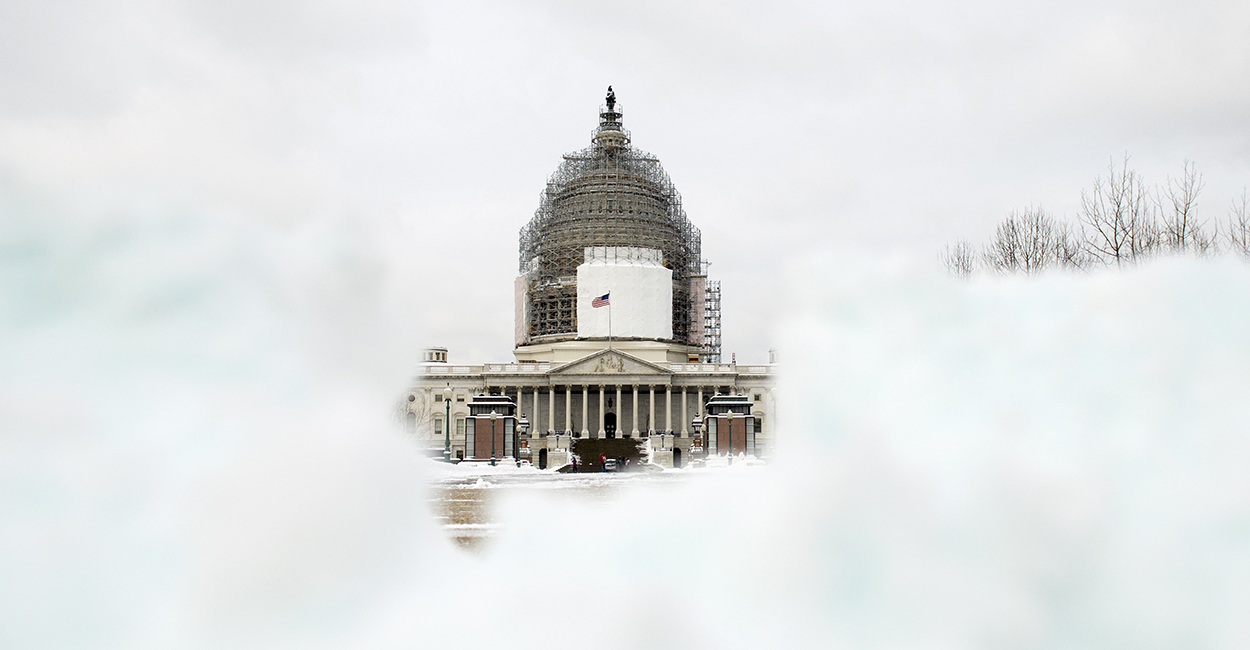
Photo: Kevin Dietsch/UPI/Newscom
So it was no surprise that the government designed during that Philadelphia summer in 1787 would be ruled not by a prince but by the people—”We the People” would be in charge. Radical as it was—in every other continent in the world—to propose that men could govern themselves, it was, in the United States, almost taken for granted. The issue in doubt was not, as Franklin’s questioner asked, whether the convention’s delegates would create a republic. The real question, as Franklin noted, was whether they could design one that would endure.
Liberty cannot long survive in a nation where the person or entity that enforces the laws is the same person or entity thatwrites the laws.
The convention’s delegates had been sent to Philadelphia to do exactly that, and at the heart of their design was Congress. That’s why the first section of the Constitution’s first article provides that “All legislative Powers herein granted shall be vested in a Congress of the United States, which shall consist of a Senate and House of Representatives.” That simple sentence captures, more than any other, the audacity of the American experiment and its break with millennia of pharaohs, despots, and divinely inspired potentates. It was no accident that the framers made it first in the structure of the new Constitution; they saw it as first in importance to the new republic.
The founders did not take their task lightly. Their revolutionary experiment in self-government might, they had to admit, not work. But it was worth the gamble because the alternatives were too terrible to contemplate. Freedom itself depended on an elected legislature of citizen lawmakers who would be accountable—directly in the House, indirectly in the Senate—for the people. They understood that “We the People” would never truly be free unless we retained control over the branch of government responsible for making laws. It was not enough that some of this legislative power be vested in a Congress whose members would stand accountable to the people at regular intervals. It was necessary to give Congress all legislative powers.
The first line of the first article of the Constitution has become so distorted that most laws are now written and promulgated by executive agencies, not by Congress.
Of course, the course,Constitution also created an executive and a judiciary, but its drafters understood that keeping Congress’s powers separate from the other branches was necessary to preserve liberty. In the Federalist Papers, James Madison wrote that “no political truth is certainly of greater intrinsic value, or is stamped with the authority of more enlightened patrons of liberty” than the maxim that “the legislative, executive, and judiciary departments ought to be separate and distinct.” Liberty cannot long survive in a nation where the person or entity that enforcesthe laws is the same person or entity that writes the laws.
That ideal of separated powers, however, is far from the reality in which we live. The first line of the first article of the Constitution has become so distorted by successive Supreme Courts, Congresses, and power-hungry presidents that most laws are now written and promulgated by executive agencies, not by Congress. It is a system that is not just ripe for abuse but already being abused. Our federal regulatory system heavily burdens families, consumers, workers, small business owners, and vital American institutions, all of which are adversely affected by arbitrary regulations produced by unaccountable bureaucrats at the EPA [Environmental Protection Agency], the NLRB [National Labor Relations Board], the FCC [Federal Communications Commission], the SEC [Securities and Exchange Commission] and a host of other federal agencies that exercise rule-making authority largely unchecked by Congress and the courts. They echo one of the complaints against King George III, as articulated in the Declaration of Independence, which condemned the despised monarch for erecting “a multitude of New Offices” and sending “hither swarms of Officers to harass our people, and eat out their substance.”
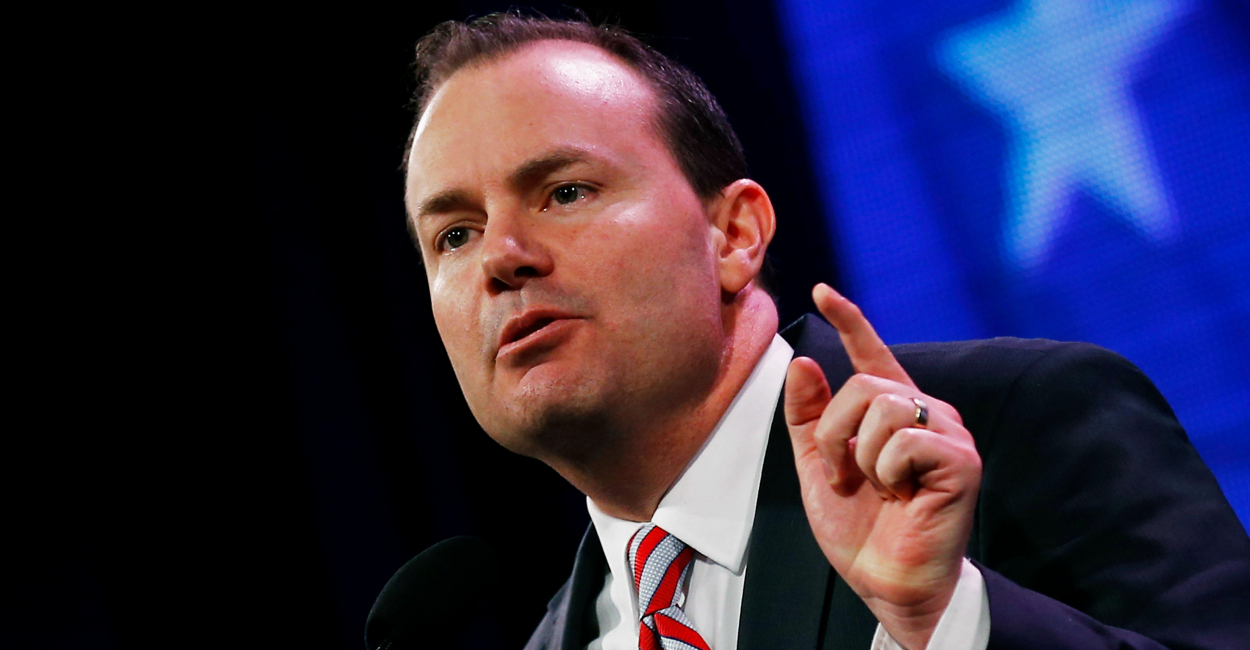
Sen. Mike Lee. (Photo: Jim Young/Reuters/Newscom)
For nearly a century Washington has been sapping Congress of the legislative powers guaranteed by the first line of Article I and creating what Madison warned against: “a gradual concentration of the several powers in the same department.” This chapter tells the story of how we got here—including the Constitutional Convention’s resounding rejection of the brilliant but misguided Alexander Hamilton’s proposal for an American king and ending with shortsighted choices by Congress, the courts, and even the citizenry that have combined to undermine the first article of the Constitution and produce something very much like a monarchy.
Since the advent of delegation to executive agencies, this cycle has repeated itself hundreds—perhaps thousands—of times. Congressmen claim credit for passing a statute with lofty promises, such as stabilizing the market for farmers. Then, in the face of their constituents’ criticism of an agency-made policy that harms them by fulfilling those promises, congressmen criticize the policy without having to actually vote against it.
Consider the costs of reducing air pollution. The Environmental Protection Agency’s clean-air regulations cost Americans tens of billions of dollars every year. They result in higher electric bills; fewer jobs and lower wages for coal miners, car makers, and other workers; and less value for anyone who has invested (either directly or through a mutual fund or retirement plan) in a company that produces or uses energy—in other words, almost any company in America.

Environmental Protection Agency Administrator Gina McCarthy. (Photo: Jim Lo Scalzo/Newscom)
For good reason, we as a society have decided that this price (that is, the price of clean air) should be paid. But in imposing these billions of dollars of costs, there are countless difficult decisions to be made—decisions that inevitably involve a balancing of the costs and benefits of each possible restriction and culminate in a determination as to which costs are worth bearing and who will bear them. New power plants or old power plants? Car owners or electricity users? States that rely on coal or states that rely on natural gas?
While promising to reduce air pollution, the Clean Air Act answered almost none of these hard questions. It simply told the EPA to put whatever limits on pollutants the agency deemed “requisite to protect the public health” with an “adequate margin for safety.” Hardly anyone was against this law—until they became the ones who had to pay for it.
By declining to make hard choices in the act, Congress had empowered others to make those choices.
Among the most enthusiastic advocates for the law were New York’s liberal congressmen and their constituents. Opposing the bill before its passage would have been outright heresy at an Upper West Side cocktail party. But several years later, when the Clean Air Act was used to impose tolls on New York City’s bridges in order to increase funds for public transportation, city dwellers balked.
Sure, people in New York City wanted less pollution. Sure, improving mass transit would reduce automotive pollution. But tolls on bridges? That was going to hit New Yorkers right in their pocketbooks. After all, they lived on and around an island; how dare anyone charge them money to cross a bridge!
Of course, the tolls were the result of the law that New York City’s congressmen had championed. If liberal legislators had voted against the Clean Air Act, they might well have been voted out of office for opposing it. But by declining to make hard choices in the act, Congress had empowered others to make those choices. And when those choices were made in a way that hurt those legislators’ constituents, the congressmen feigned outrage. They even marched in protest across the Brooklyn Bridge. Only in the bizarre world of delegating legislative powers could members of Congress lead a march in protest against the consequences of a law they voted for.Source


Who Are The Federalist ?
 |
| Alexander Hamilton |
 |
| James Madison |
The Federalist
Introduction
 |
| John Jay |

Sons of Liberty: 2
"Truth will ultimately prevail where pains is taken to bring it to light."
George Washington [Letter to Charles M. Thruston, August 10, 1794]

[That the legislative body] can make no law which will not have its full operation on themselves and their friends, as well as on the great mass of the society. This has always been deemed one of the strongest bonds by which human policy can connect the rulers and the people together. It creates between them that communion of interests and sympathy of sentiments, of which few governments have furnished examples; but without which every government degenerates into tyranny.
WHAT MAKES AMERICA GREAT ?
UNDERSTANDING WHAT MAKES AMERICA GREAT !

Americans have always believed that this nation, founded on the idea of freedom, has a vital responsibility to the rest of the world. As George Washington first recognized, the “preservation of the sacred fire of liberty” depended on the American people. These words remain true today.
Understanding America explores how the United States’ commitment to the universal truths of human equality and the right to self-government—as proclaimed in the Declaration of Independence—requires a vigilant defense of the cause of liberty, both at home and abroad.
Subscribe to:
Posts (Atom)